
HEC Montréal
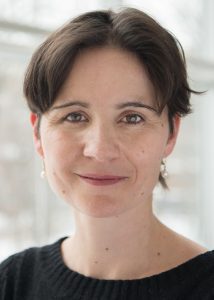
Aurélie Labbe is a Full Professor in the Department of Decision Sciences at HEC Montréal. She earned her Ph.D. in Statistics from the University of Waterloo in 2005, where her dissertation focused on Bayesian methods for gene expression data. She began her academic career as an Associate Professor in the Department of Mathematics and Statistics at Université Laval. She later joined McGill University as an Associate Professor in both the Department of Epidemiology and Biostatistics and the Department of Psychiatry, and was also a researcher at the Douglas Hospital Research Centre, a McGill-affiliated institution.
Aurélie Labbe has developed a strong research portfolio as a principal investigator on several projects funded by the Natural Sciences and Engineering Research Council of Canada (NSERC) and the Canadian Institutes of Health Research (CIHR). Her research has focused on the development of statistical methods for the analysis of genomic data, as well as on numerous collaborative projects in related fields. More recently, she has expanded her work into broader areas of data science, with a particular emphasis on the analytical challenges posed by data from intelligent transportation systems.
As co-Scientific Director at IVADO, Academic Partnerships, Aurélie Labbe provides strategic research leadership. In this role, she is responsible for establishing and strengthening links with faculties and departments across the five partner universities, and for integrating them into IVADO’s research and knowledge transfer activities.
McGill University
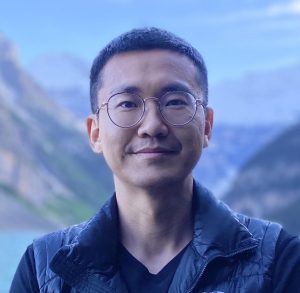
Archer Yi Yang is an Associate Professor in the Department of Mathematics and Statistics at McGill University, and an Associate Member of the School of Computer Science and the Quantitative Life Sciences program. He is also an Associate Academic Member of Mila – Quebec AI Institute. His main areas of research include statistical machine learning, high-dimensional inference, uncertainty quantification and reliable AI, computational statistics and scalable algorithms, biomedical and biochemical data science, and AI for drug discovery.

University of Alberta
Dr. Bei Jiang is an Associate Professor in the Department of Mathematical and Statistical Sciences at the University of Alberta, a Fellow of the Alberta Machine Intelligence Institute (Amii), and a Canada CIFAR AI Chair. She received her PhD in Biostatistics from the University of Michigan in 2014, followed by a postdoctoral appointment in the Department of Biostatistics at Columbia University (2014–2015), before joining the University of Alberta as an Assistant Professor in 2015. Dr. Jiang has authored more than 50 journal articles—including in the Annals of Statistics, Journal of the American Statistical Association and the Journal of Machine Learning Research and over 20 peer-reviewed conference papers at venues such as NeurIPS, ICML, ICLR, and AAAI. Her research focuses on Bayesian hierarchical modeling, statistical learning methods that advance privacy and fairness, and federated statistical inference.
Dr. Jiang has an extensive record of service to the statistical community. She has served as a judge for the Statistical Society of Canada (SSC) Case Studies in Data Analysis Poster Competition (2019); Local Organizing Committee Chair for WNAR (2018) and the ICSA Canada Chapter Symposium (2022); a member of the SSC Board of Directors (2022–2024) and the SSC Student Research Award Committee (2021–2023); and currently serves on the SSC Equity, Diversity, and Inclusion Committee, the CANSSI Showcase Organizing Committee, the Committee of the COPSS Presidents’ Award (2025-2028), and the JSM Program Committee (2025-2026). She is an Associate Editor for the Journal of the American Statistical Association. Dr. Jiang is the 2025 recipient of the COPSS Emerging Leaders Award, recognizing early-career statistical scientists whose leadership and scholarship are shaping the field.
University of Toronto
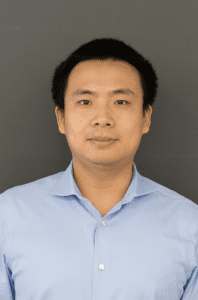
Dehan Kong is an Associate Professor of Statistics at the University of Toronto. His research focuses on developing advanced machine learning and data science methodologies for analyzing large-scale, complex, and multi-resolution real-world data, with applications in modern scientific and biomedical studies. He is a recipient of the NSERC Discovery Accelerator Supplement Award. He currently serves as an Associate Editor for the Journal of the American Statistical Association and Data Science in Science, and as an Editorial Board Reviewer for the Journal of Machine Learning Research.
Organizers

McGill University
Eric Kolaczyk is a professor in McGill University’s Department of Mathematics and Statistics, and the founding director of the McGill Computational and Data Systems Institute (CDSI). His research is focused on how statistical and machine learning theory and methods can support human endeavours enabled by computing and engineered systems, frequently from a network-based perspective of systems science. He collaborates regularly on problems in computational biology, computational neuroscience and, most recently, AI-assisted chemistry and materials science. He has published over one hundred articles, including several books on the topic of network analysis.
As an associate editor, Kolaczyk has served on the boards of JASA and JRSS-B in statistics, IEEE IP and TNSE in engineering, and SIMODS in mathematics. He formerly served as co-chair of the U.S. National Academies of Sciences, Medicine, and Engineering Roundtable on Data Science Education. He is an elected fellow of the AAAS, ASA and IMS, an elected senior member of IEEE, and an elected member of the ISI.
University of Alberta
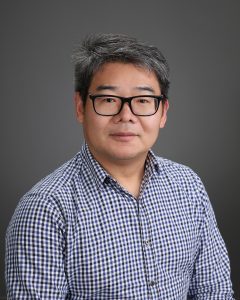
Dr. Linglong Kong is a Professor in the Department of Mathematical and Statistical Sciences at the University of Alberta, holding a Canada Research Chair in Statistical Learning and a Canada CIFAR AI Chair. He is a Fellow of the American Statistical Association (ASA) and the Alberta Machine Intelligence Institute (Amii), with over 130 peer-reviewed publications in leading journals and conferences such as AOS, JASA, JRSSB, NeurIPS, ICML, and ICLR. Dr. Kong received the 2025 CRM-SSC Prize for outstanding research in Canada. He serves as Associate Editor for several top journals, including JASA and AOAS, and has held leadership roles within the ASA and the Statistical Society of Canada. Dr. Kong’s research interests include high-dimensional and neuroimaging data analysis, statistical machine learning, robust statistics, quantile regression, trustworthy machine learning, and artificial intelligence for smart health.
University of Toronto
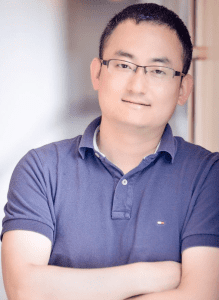
Qiang Sun is currently an associate professor of Statistical Sciences, Computer Science, and Computer and Mathematical Sciences at the University of Toronto (UofT) and an affiliated professor at MBZUAI, where he leads the NeXAIS (AGI × Stats) group. His current research focuses on trustworthy ML, efficient GenAI, and foundations of AGI, driven by real-world challenges in technology, finance, and science. Prior to his tenure at UofT, he was an associate research scholar at Princeton University. He earned his PhD from the University of North Carolina at Chapel Hill and his BS in SCGY from the University of Science and Technology of China. He is also recognized as a distinguished alumnus of UNC-Chapel Hill.
In addition to his faculty role, he currently serves as an associate editor for the Journal of Machine Learning Research (JMLR), the Journal of the American Statistical Association (JASA), the Electronic Journal of Statistics (EJS), and Data Science in Science (DSiS). He also serves as an area chair for several major ML conferences, including ICLR, COLT, AISTATS, and UAI.
Workshops
[FULL] Bootcamp: Statistical Insights into Modern AI Systems
1st Workshop: Statistics in Trustworthy AI
2nd Workshop: Uncertainty in AI
Symposium: AI Meets Statistics: Biomedical Data Perspectives






Visiteuses et visiteurs à long terme
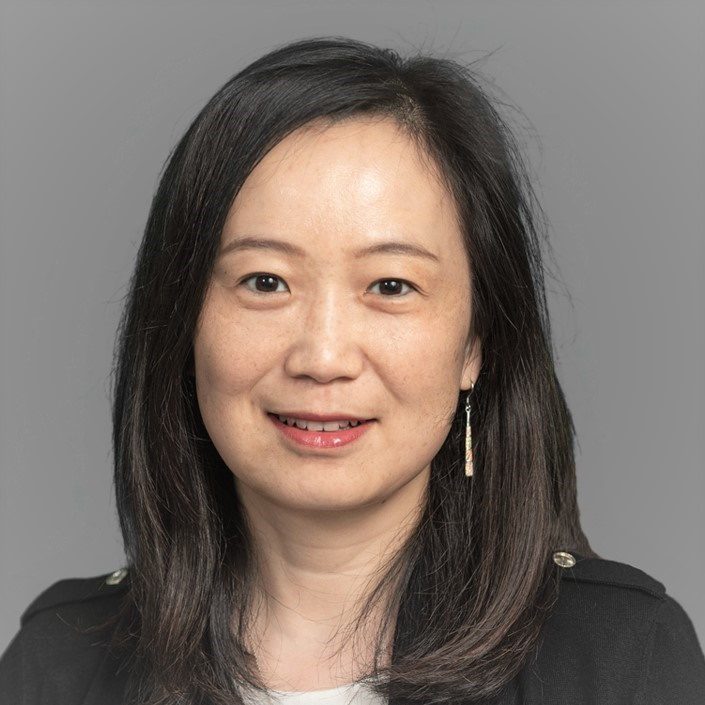
Joyce Chai est professeure au département d’ingénierie électrique et d’informatique de l’université du Michigan. Elle est titulaire d’un doctorat en informatique de l’université Duke. Ses recherches portent sur le traitement du langage naturel, l’IA incarnée et la collaboration entre l’homme et l’IA. Ses travaux actuels explorent l’intersection entre le langage, la vision et la robotique afin de permettre une communication contextualisée avec des agents incarnés. Elle a reçu le prix NSF Career Award. Elle a également reçu plusieurs prix avec ses étudiants (par exemple, le prix du meilleur article long à l’ACL 2010, les prix du meilleur article à l’EMNLP 2021 et à l’ACL 2023, et la première place au Amazon Alexa AI Simbot Challenge 2023). Elle est membre de l’ACL.

Abhik Roychoudhury est professeur titulaire de la chaire Provost en informatique à l’Université nationale de Singapour (NUS), où il dirige une équipe de recherche sur les logiciels fiables et sécurisés (TSS). Il est conseiller principal chez SonarSource, suite à l’acquisition de sa spin-off AutoCodeRover, spécialisée dans les agents IA pour le codage. Il a obtenu son doctorat en informatique à l’université Stony Brook en 2000 et est membre du corps enseignant de la NUS School of Computing depuis 2001. Le groupe d’Abhik à la NUS s’est concentré sur l’analyse symbolique des programmes, ainsi que sur les applications de l’analyse des programmes dans des domaines tels que la sécurité informatique, l’IA agentielle ou les systèmes cyber-physiques. Ces travaux ont été récompensés par divers prix, notamment le prix du document le plus influent (Test-of-time award) de la Conférence internationale sur le génie logiciel (ICSE) pour la réparation de programmes (basée sur l’analyse symbolique), et le prix IEEE New Directions Award 2022 (conjointement avec Cristian Cadar) pour ses contributions à l’exécution symbolique.
Abhik a été le premier lauréat du prix NUS Outstanding Graduate Mentor Award 2024. Les doctorants diplômés de son équipe de recherche ont obtenu des postes d’enseignants dans de nombreuses institutions universitaires de premier plan. Il a occupé diverses fonctions au sein de la communauté de recherche en génie logiciel, notamment en tant que président des principales conférences dans ce domaine, ICSE (en 2024) et FSE (en 2022). Il est actuellement président du comité directeur de la FSE. Il est membre du comité de rédaction de Communications of the ACM. Il est l’actuel rédacteur en chef de l’ACM Transactions on Software Engineering and Methodology (TOSEM). Abhik est membre de l’ACM, reconnu pour ses contributions à la réparation automatisée de programmes et aux tests de robustesse.
Ivan Titov est professeur titulaire aux universités d’Édimbourg et d’Amsterdam. À Édimbourg, il dirige le Centre de formation doctorale en traitement du langage naturel et l’unité ELLIS locale. Ses recherches portent sur le développement de modèles linguistiques fiables, robustes, interprétables et contrôlables. Il a reçu des prix pour ses articles lors de conférences de premier plan (notamment ACL et EMNLP) et des bourses telles que la bourse ERC et le prix néerlandais Vici. Ivan est membre de Turing, membre d’ELLIS et codirecteur du programme ELLIS NLP. Il a également été président du programme ICLR et CoNLL, et rédacteur en chef de TACL et JMLR.